
Tour Sites & Map
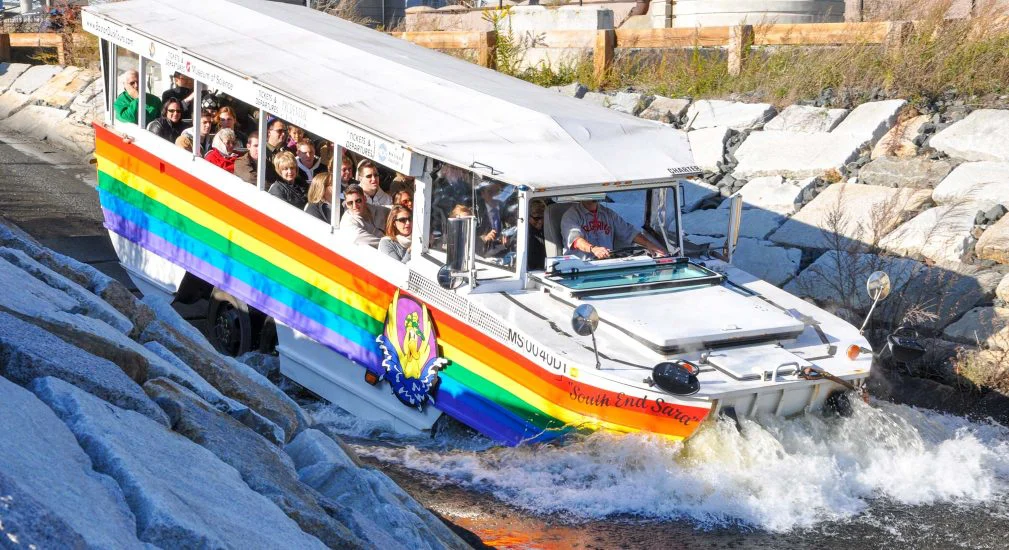
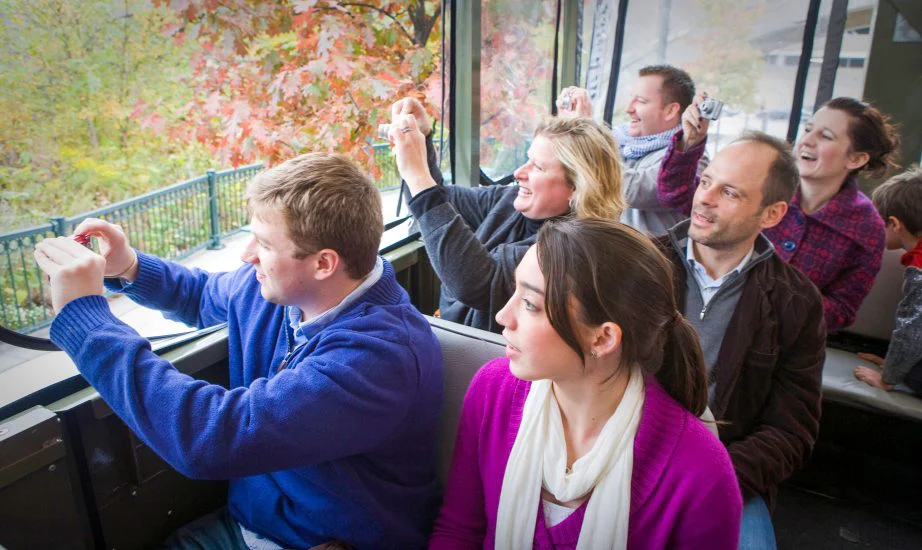
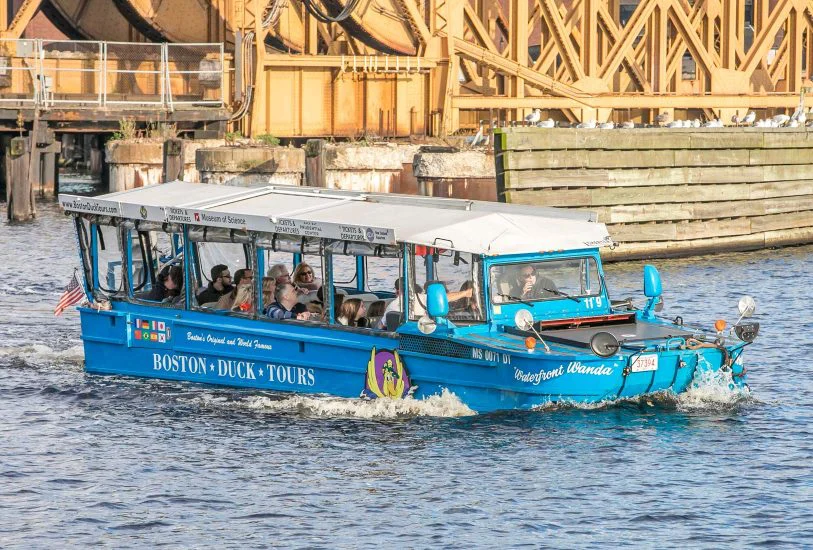
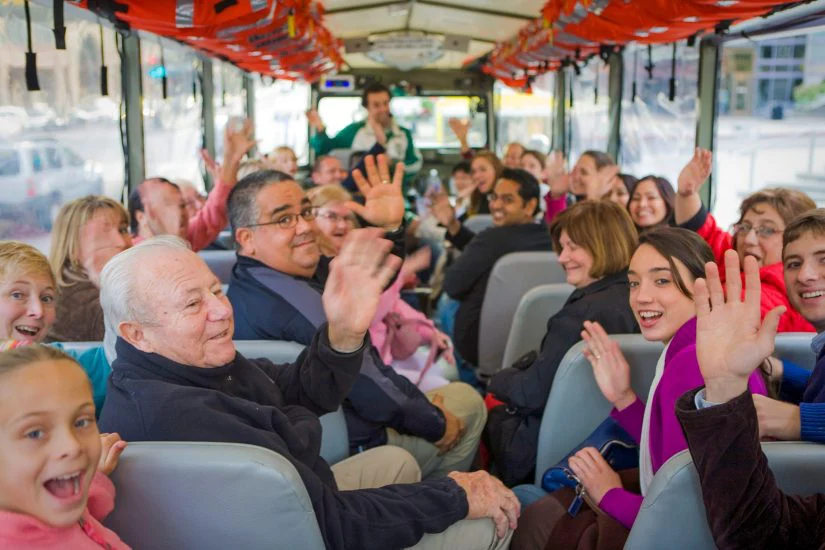
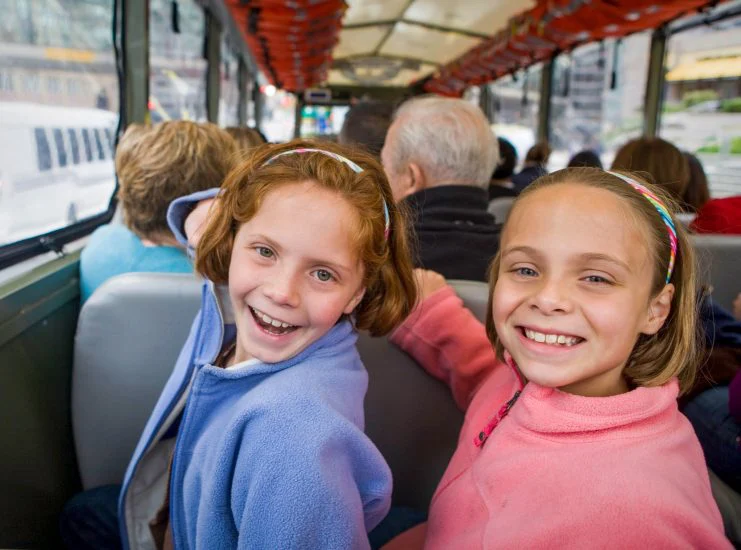
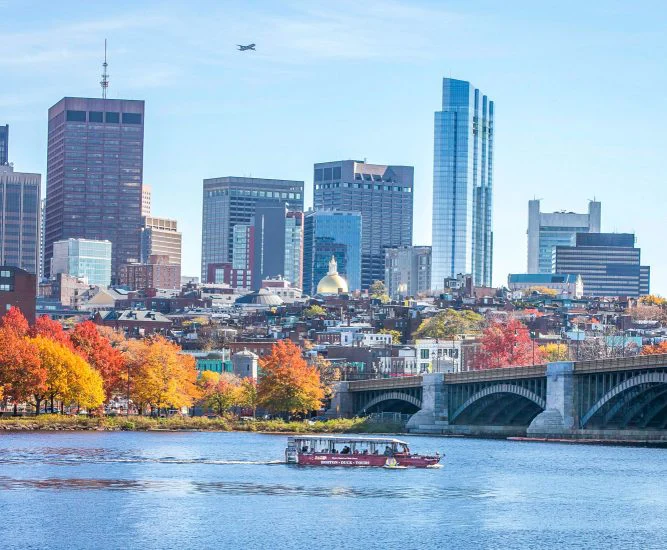
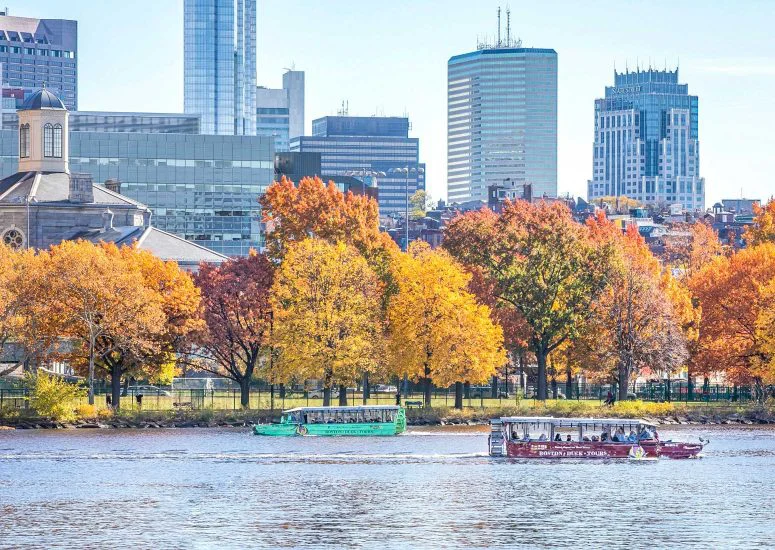
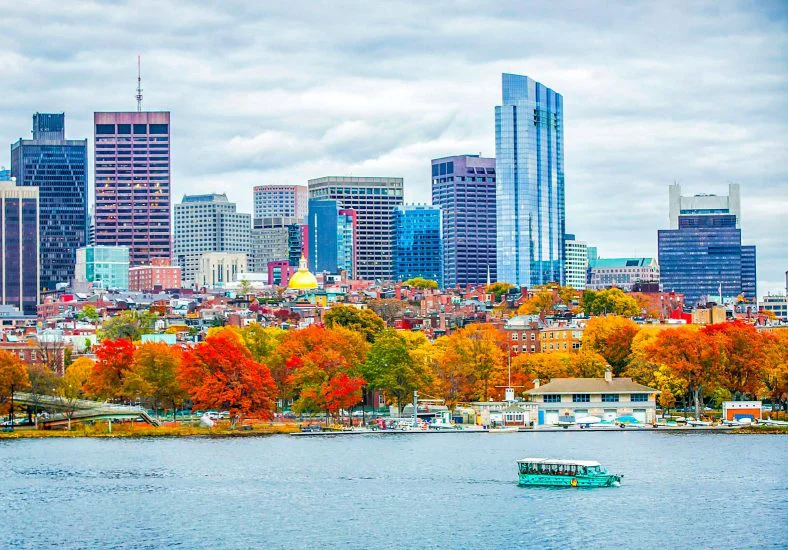
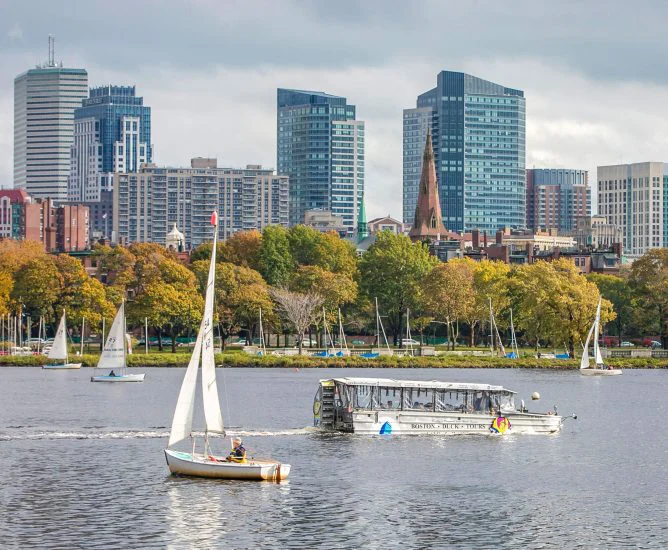
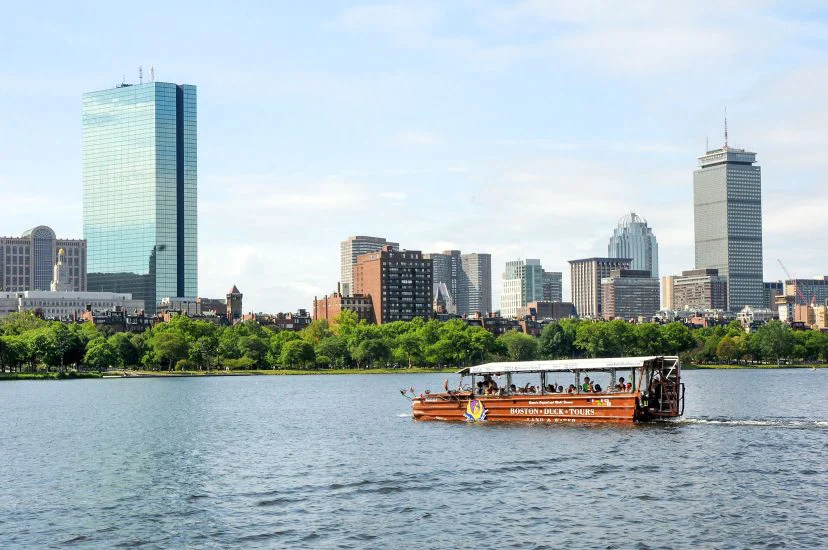
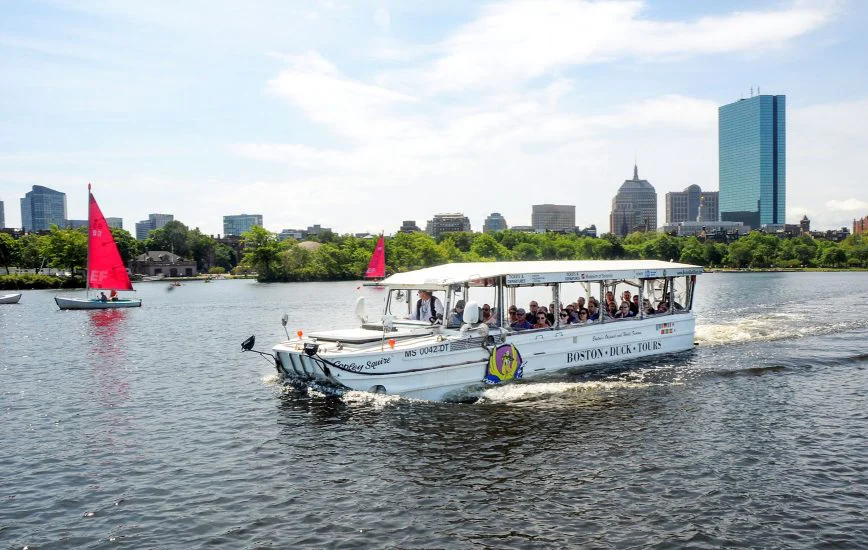
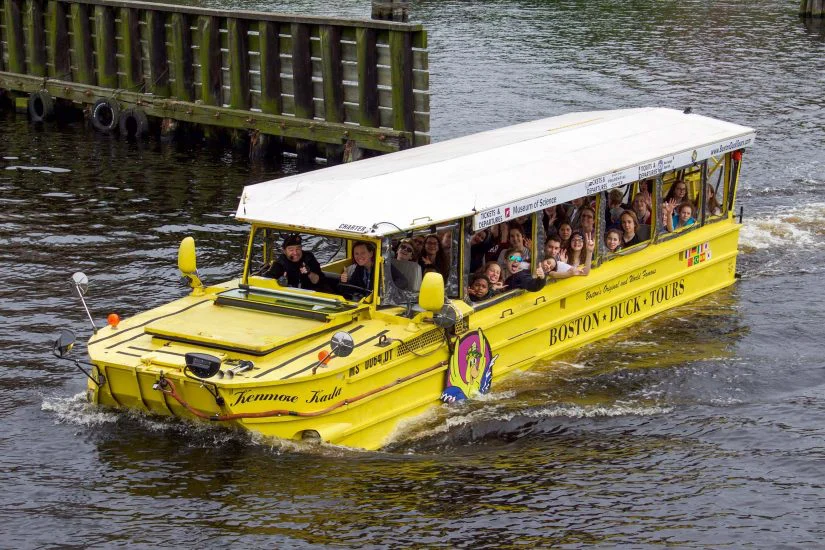
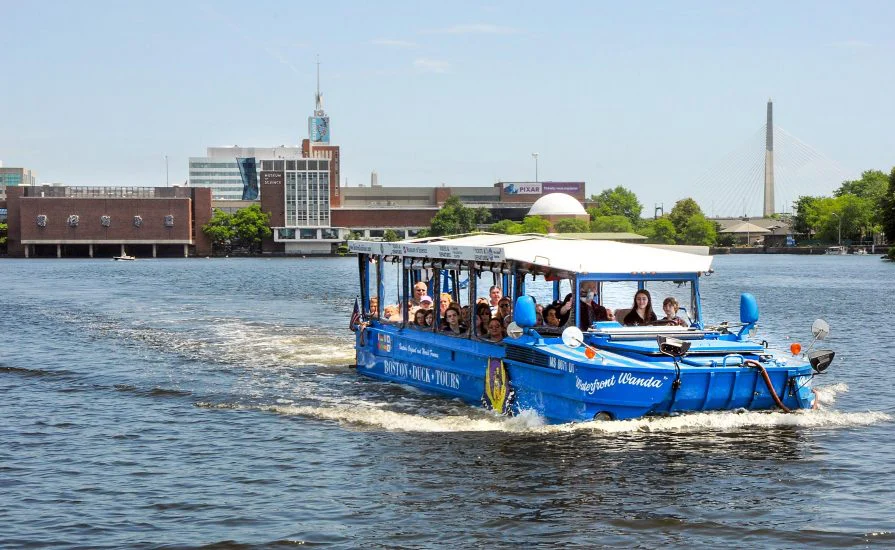
Hop aboard Boston Duck Tours and enjoy a fully narrated and guided, historic tour of Boston in a “DUCK”, a W.W.II style amphibious landing vehicle that travels on land and water. You’ll be greeted by one of our legendary ConDUCKtors, who’ll be narrating your tour. You’ll cruise by all the places that make Boston the birthplace of freedom and a city of firsts, from the golden domed state House to the Boston Common, the historic North End to fashionable Newbury Street, Quincy Market to the Prudential Tower, and more. Just when you think you’ve seen it all, it’s time for a Big Splash as your ConDUCKtor drives the DUCK right into the Charles River for a breathtaking view of the Boston and Cambridge skylines. Come and experience the best introDUCKtion to Boston!
Prudential Tower
Prudential Tower
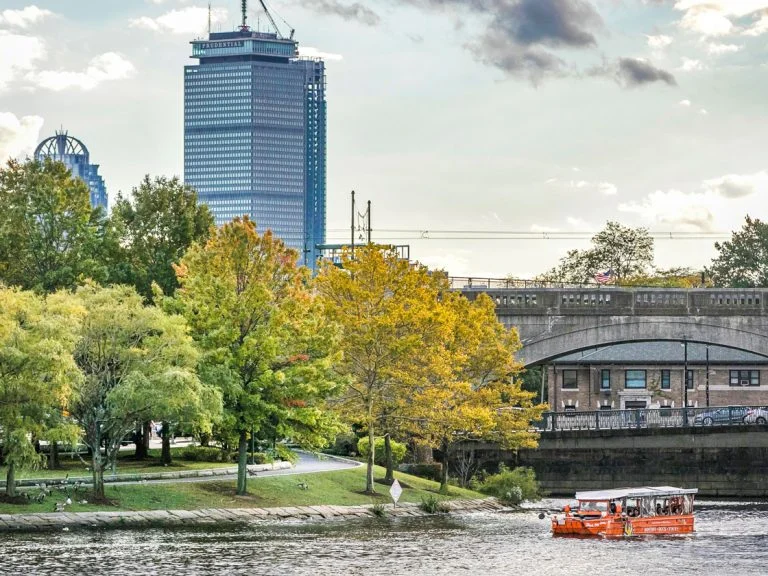
Construction of the Prudential Center began in 1959. It was built over the Massachusetts Turnpike on an old rail yard that had once been used to bring fill into the Back Bay. The center includes offices, apartment buildings, hotels, retail space and restaurants. The 52-story Prudential Building was completed in 1965. At that time it was Boston’s tallest building.
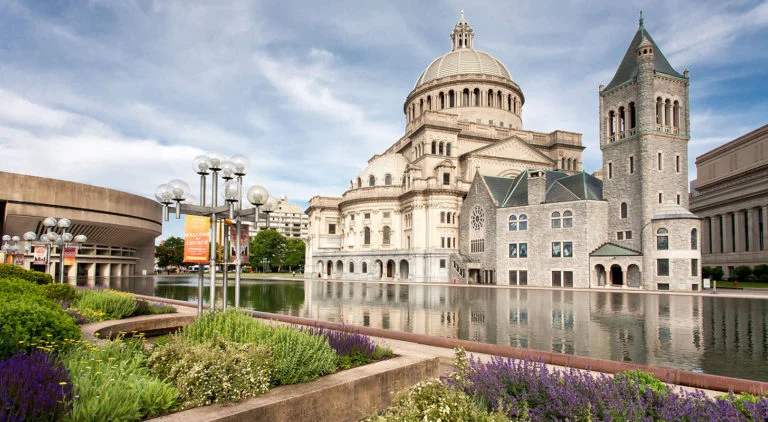
Christian Science Plaza
Christian Science Plaza
Located in the heart of Back Bay, the Christian Science Plaza is home to The First Church of Christ, Scientist (The Mother Church), The Christian Science Publishing Society, The Mary Baker Eddy Library, and the interactive How Do You See the World? experience with the Mapparium™ globe. You’ll also find the Reflecting Pool and the Children’s Fountain.
The Plaza is always open to the public. We offer tours of the Mapparium™ globe in the How Do You See the World? experience and The Mother Church, which has one of the world’s largest pipe organs.
The How Do You See the World? experience explores stories about global progress—how individuals worldwide have overcome challenges and found hope. The space encourages you to reflect on this question while exploring the interactive exhibits:
- Walk through the iconic Mapparium™ globe.
- Look deeper into humanity’s advancement and find stories about individuals who have made a difference in their communities with The Christian Science Monitor.
- Learn about the woman who founded the Christian Science church and the Monitor—Mary Baker Eddy (1821–1910)—through exploring her lifelong love of the Bible and its ongoing relevance and application to universal questions today.
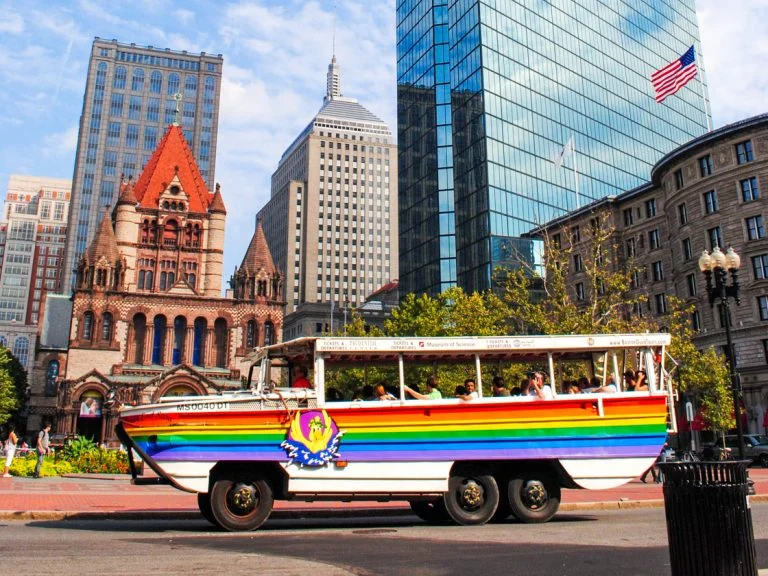
Copley Square
Copley Square
Copley Square was originally called Art Square. Boston’s first Museum of Fine Arts was in Copley Square on the site where the Copley Plaza Hotel is today.
Art Square was renamed Copley Square in 1883 to honor the famous Boston painter John Singleton Copley. Copley lived in Boston until just before the Revolutionary War. He moved to London and never came back to Boston. There is a statue of Copley in the square a few feet back from the Boylston Street sidewalk.
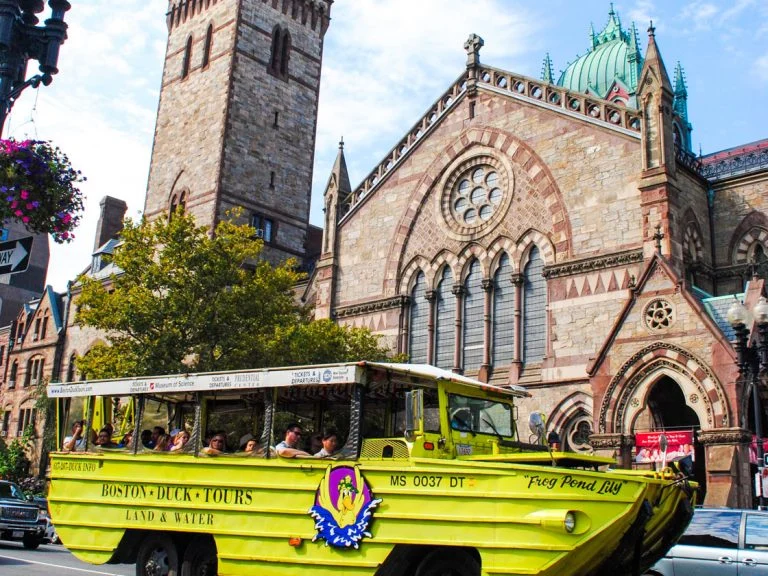
Old South Church
Old South Church
The Old South Church was completed in 1875. The firm of Cummings and Sears designed the building. The congregation is one of the oldest in the city, dating back to 1669. One of the original members was John Alden, son of John and Priscilla Alden. In later years, the congregation included Ben Franklin, Sam Adams, William Dawes, and Phillis Wheatley (America’s first published black poet).
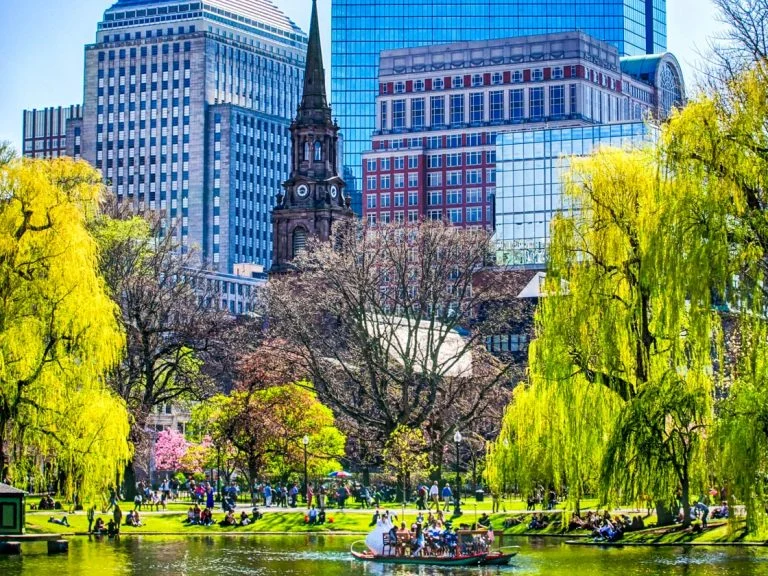
Arlington Street Church
Arlington Street Church
In 1859, the congregation of the Federal Street Church in downtown Boston decided to build a new church in the developing Back Bay. Construction of the Arlington Street Church began that year. The church was dedicated in 1861. This was the first church built in the Back Bay. Some of Solomon Willard’s interior wood carvings from the old Federal Street Church are now in the Arlington Street Church (Willard supervised the construction of the Bunker Hill Monument). The Arlington Street Church is known for its sixteen beautiful Tiffany glass windows.
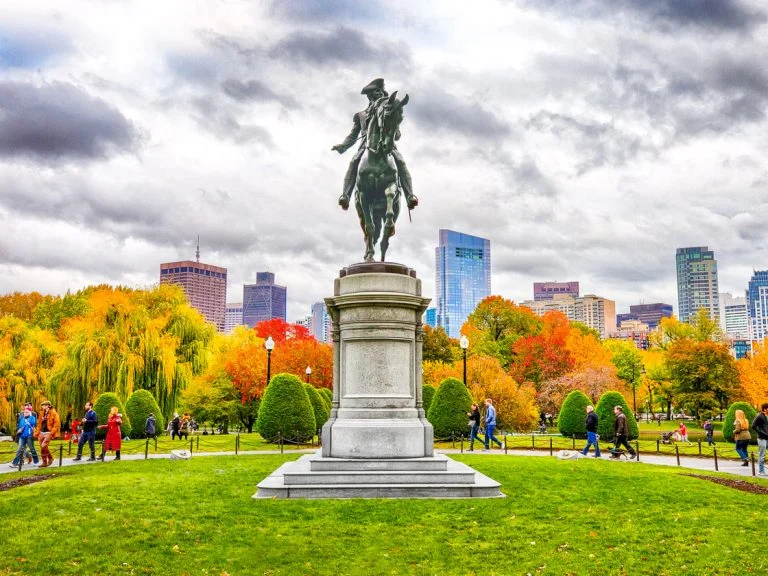
Boston Common & Public Gardens
Boston Common & Public Gardens
Boston Common is the oldest public park in the United States. It dates back to 1634. This piece of land was once the property of Reverend William Blackstone. In 1634, Blackstone sold the property to the Puritans for 30 pounds (about $150 today) and moved to Rhode Island. The land became Boston’s common area, where families could graze their livestock.
The Public Garden was dedicated in 1837. It is on 24 acres of landfill. This is the oldest public botanical garden in the United States. Today, the public garden features countless varieties of trees, shrubs, and flowers. There are also a number of statues and monuments. Every year, in the Spring, about 35,000 tulips are planted in the Public Garden. The Public Garden had the first public tulip display in the United States.
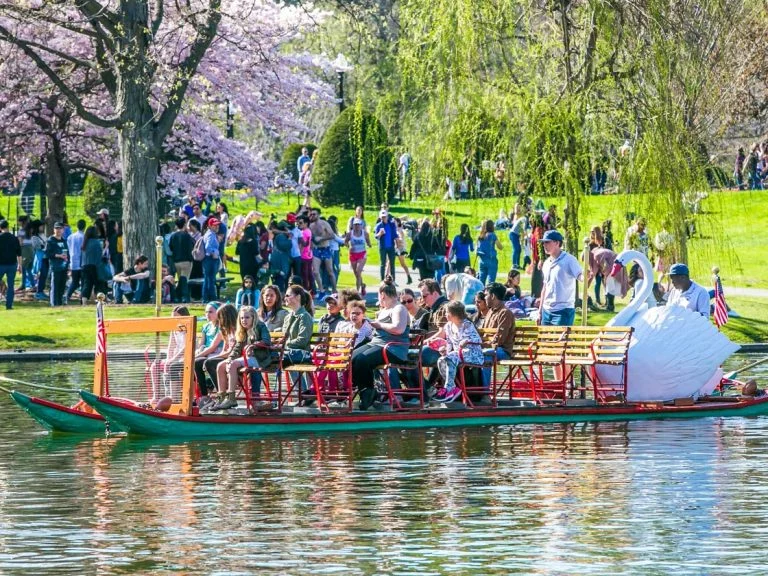
Swan Boats
Swan Boats
The Paget family has operated the Swan Boats on the Public Garden pond since 1877. Robert Paget, the founder of the Swan Boats, was inspired by the opera Lohengrin. In the opera, a knight saves his princess after crossing a river in a boat pulled by a swan. There are now six swan boats. The many celebrities who have ridden the Swan Boats include President Calvin Coolidge, Shirley Temple, Princess Grace of Monaco, Lucille Ball, President John Kennedy and Jackie Kennedy, and Ted Danson.
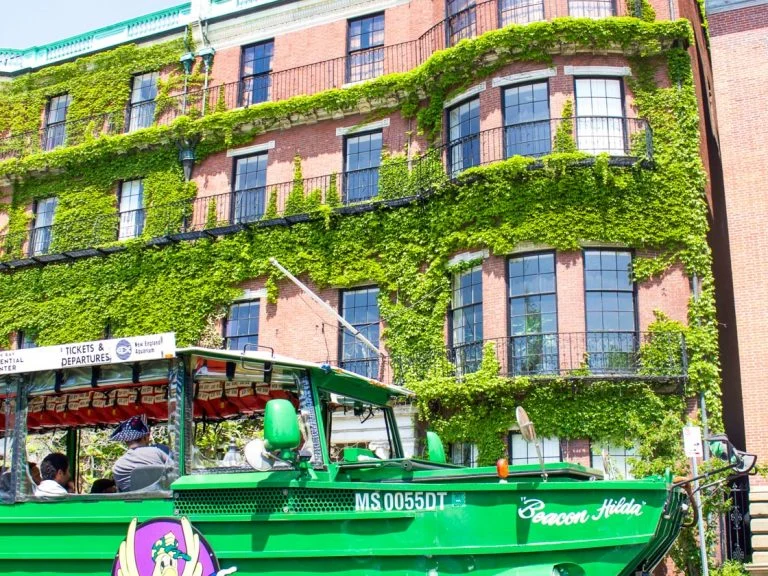
Beacon Hill
Beacon Hill
During the colonial period, Beacon Hill was mostly pastureland. There were very few homes on the hill, most notably a mansion belonging to John Hancock at the top of the hill (torn down in 1863), and John Singleton Copley’s house (torn down in 1816 and now the site of the Somerset Club). Many of the homes on Beacon Hill were built in the early 1800’s. It’s a beautiful neighborhood that has been photographed many times over the years and is a quintessential Boston neighborhood.
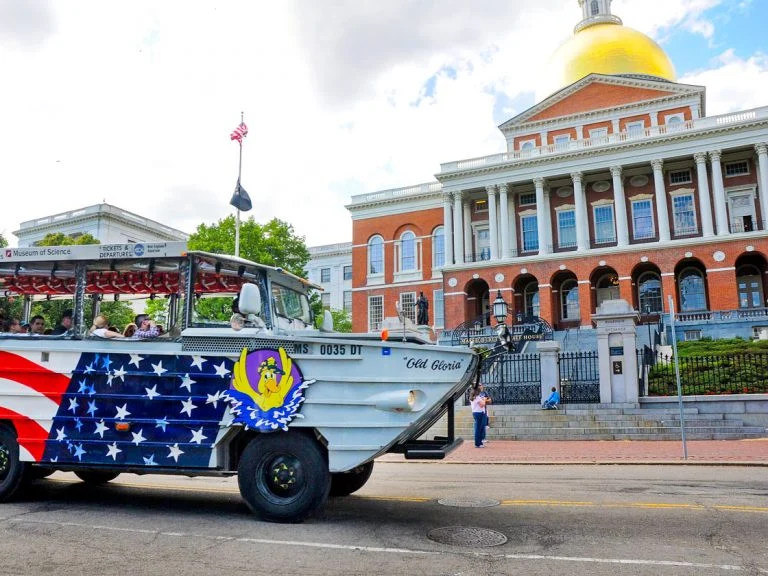
State House
State House
Charles Bulfinch designed the new State House. The original building is the red brick portion with the gold dome. Paul Revere and Sam Adams laid the cornerstone in 1795. Fifteen white horses were used to drag the cornerstone up Beacon Hill. Each horse represented one state in the Union (by 1795, Vermont and Kentucky had become states). The State House was completed in 1798. It was built on property purchased from the estate of John Hancock (Hancock died in 1793). Hancock’s house remained on Beacon Hill, next to the State House, until it was torn down in 1863.
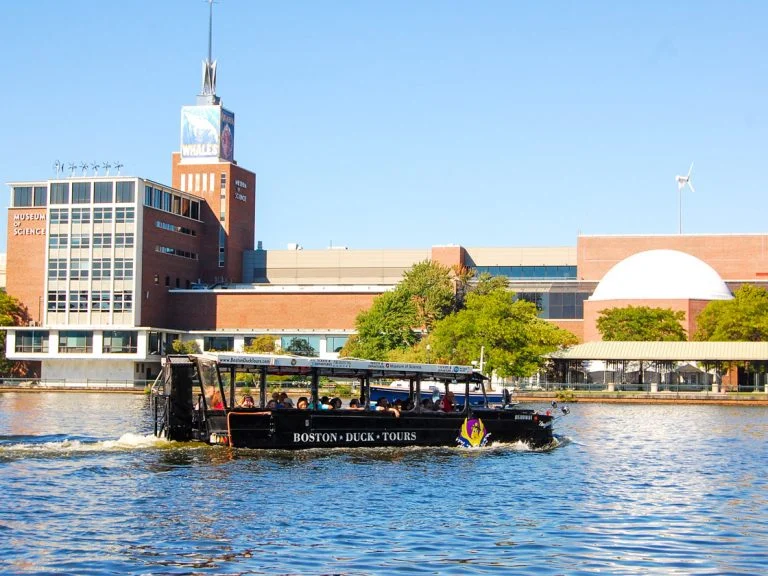
Museum of Science
Museum of Science
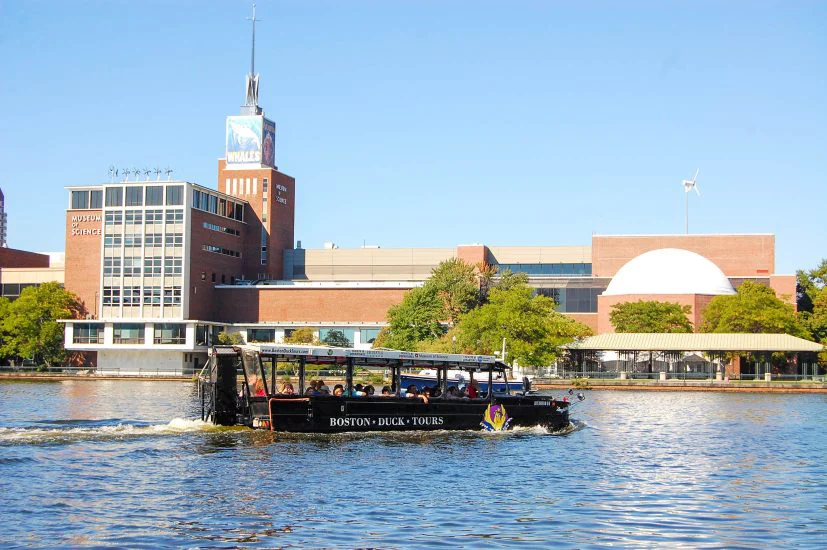
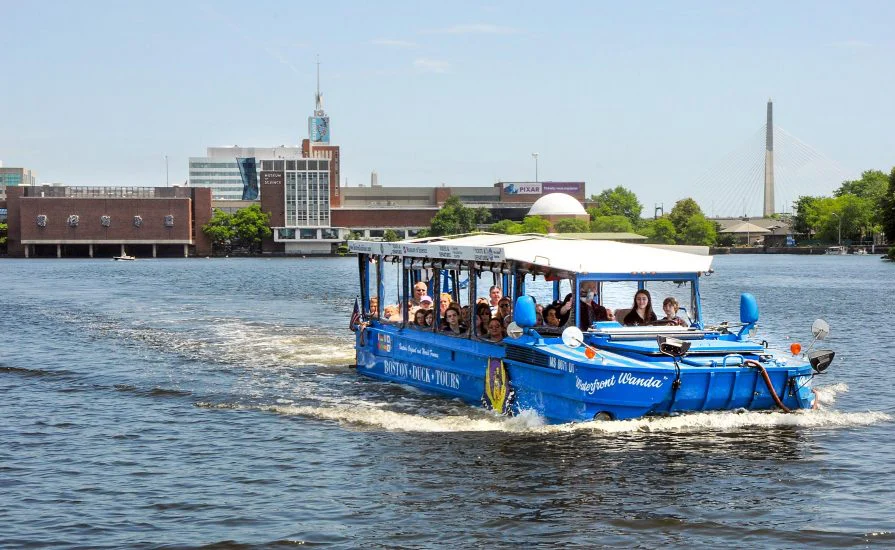
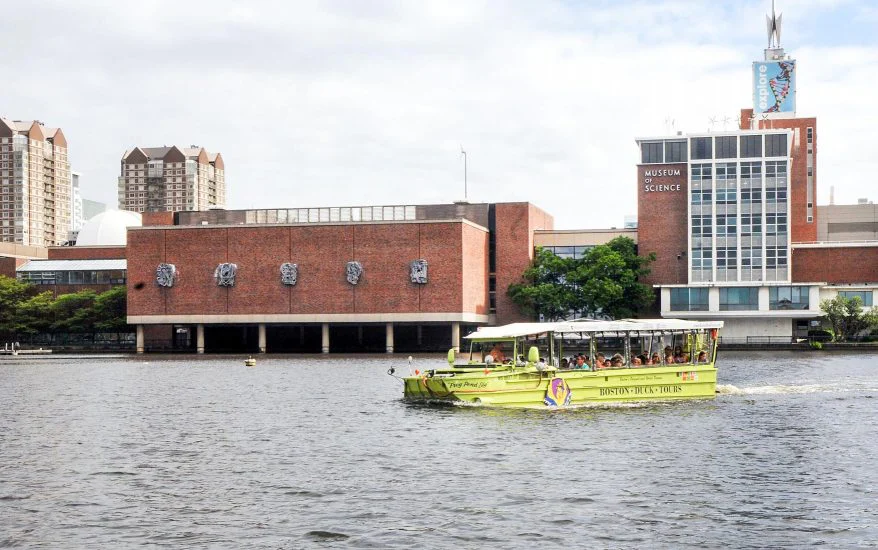
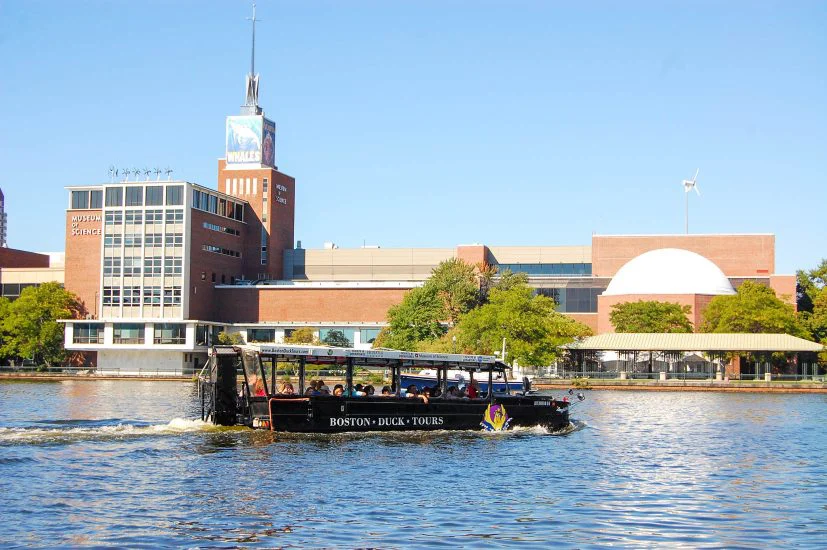
In 1830, six men interested in natural history established the Boston Society of Natural History, an organization through which they could pursue their common scientific interests. Devoted to collecting and studying natural history specimens, the society displayed its collections in numerous temporary facilities until 1864, when it opened the New England Museum of Natural History at the corner of Berkeley and Boylston Streets in Boston’s Back Bay. That museum is now known worldwide as the Museum of Science, Boston. One of the world’s largest science centers and Boston’s most attended cultural institution, the Museum attracts approximately 1.5 million visitors a year through its vibrant programs and 700 interactive exhibits.
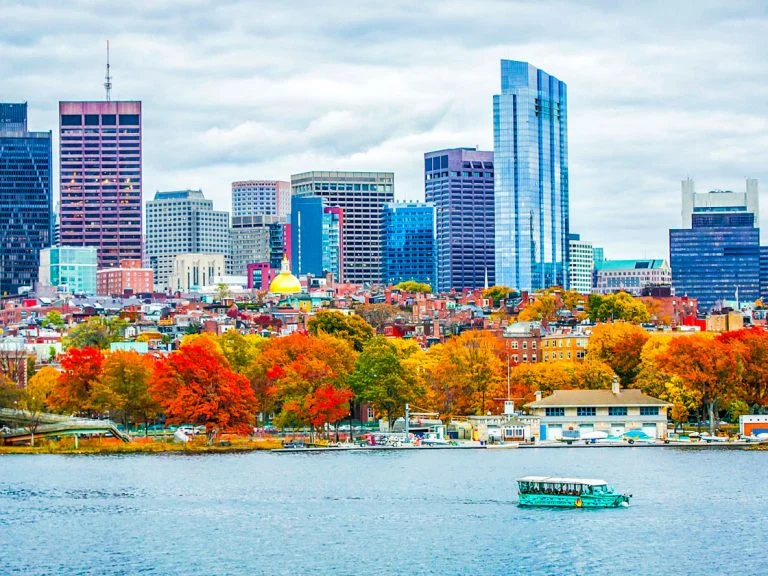
Charles River
Charles River
The Charles River is about 80 miles in length. It starts in Hopkinton and winds its way to Boston Harbor. Between the railroad bridge and the Harvard Bridge, the water averages about fifteen feet in depth. Most of the river beyond the Harvard Bridge is shallow. Four miles upriver, the water is about three feet deep.
In 1614, John Smith explored the coast of New England, including Boston Harbor, and drew maps. Back in England, 15-year old Prince Charles (the future Charles I) was asked to give names to some of the geographic features. He named the river for himself.
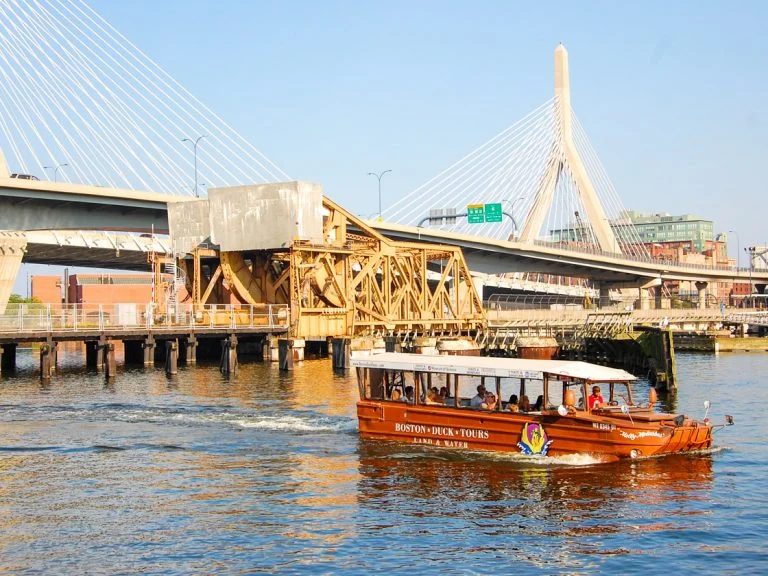
Zakim Bunker Hill Bridge
Zakim Bunker Hill Bridge
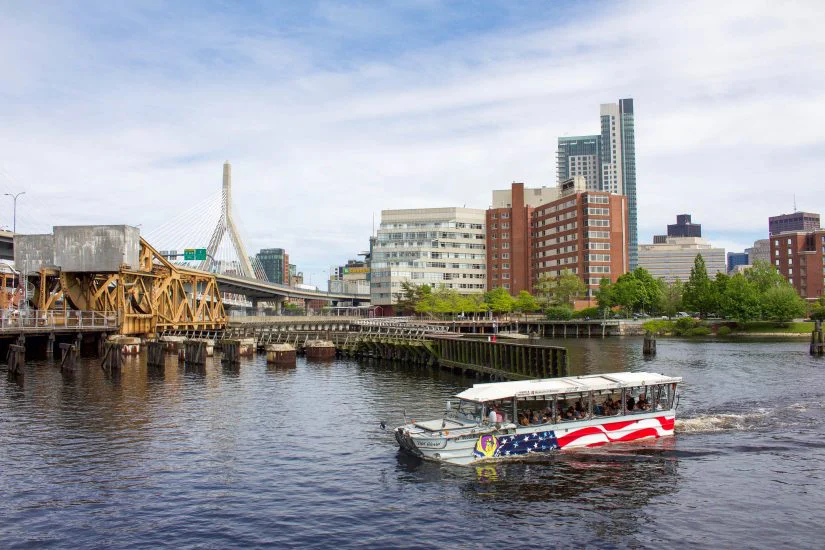
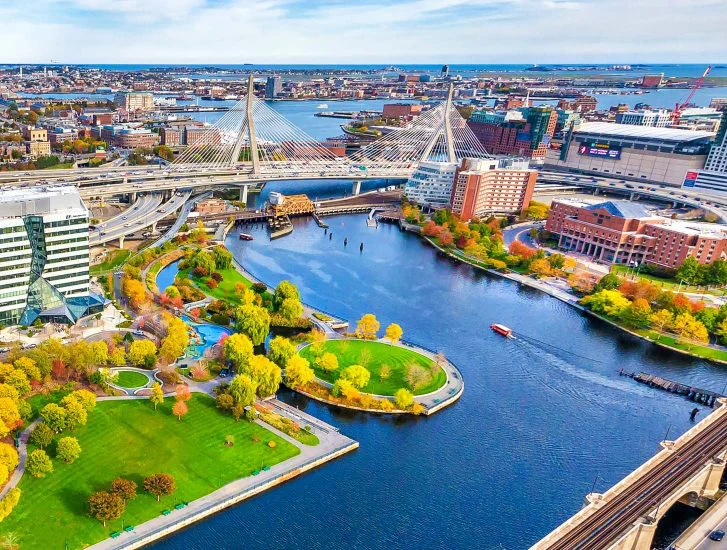
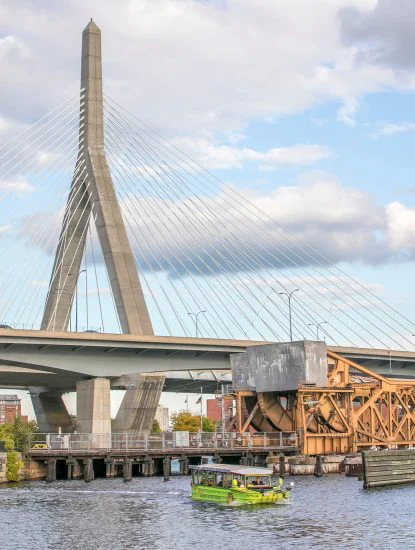
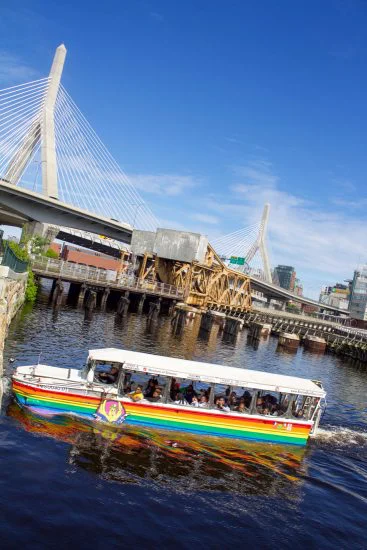
This is currently the widest cable stayed bridge in the United States. It is ten lanes wide. It was part of the Big Dig project. This bridge carries Interstate 93 over the Charles River.
The bridge was designed to withstand wind gusts up to 447 mph before shaking and will withstand a magnitude 7 earthquake. It cost $100-million and weighs 60-million pounds.
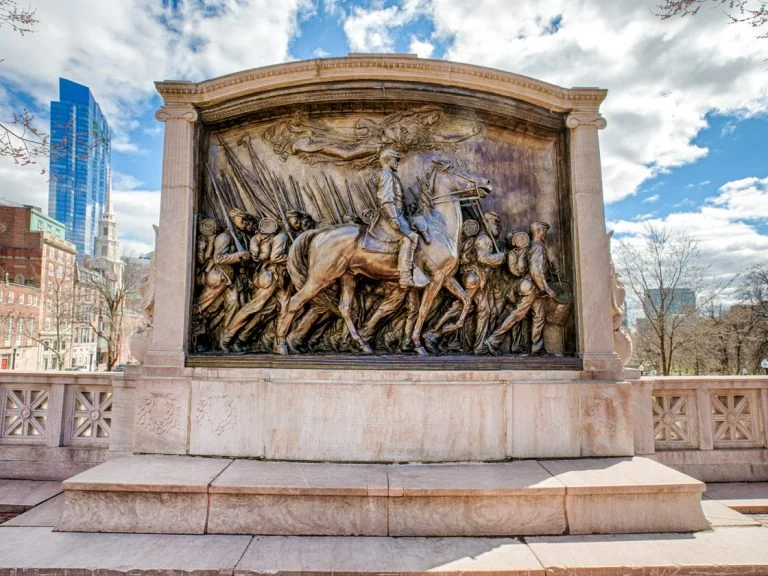
Robert Gould Shaw Memorial
Robert Gould Shaw Memorial
This monument was dedicated to Colonel Robert Gould Shaw, commanding officer of the Massachusetts 54th Volunteer Regiment. The 54th was the first all-black volunteer Union regiment organized in the North during the Civil War. Shortly after the Emancipation Proclamation of January 1863, Governor John Andrew sought permission from Washington, to recruit the 54th Regiment. Many of the volunteers were from Boston.
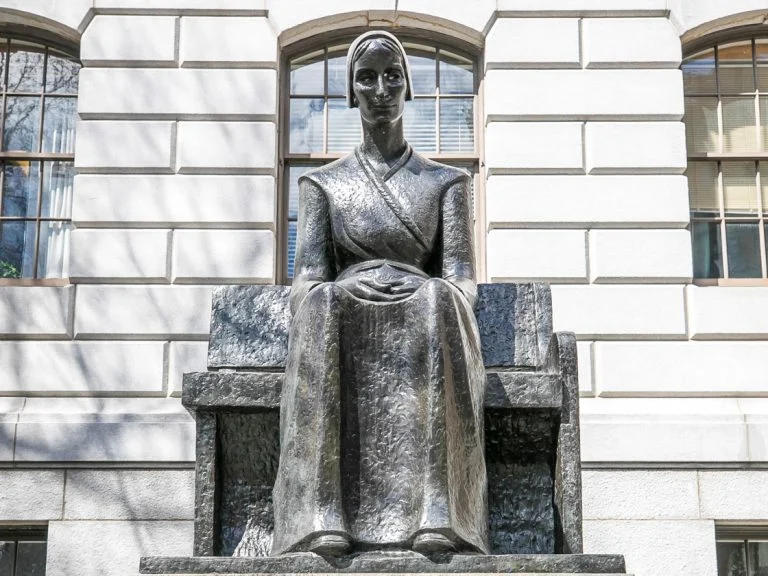
Mary Dyer Statue
Mary Dyer Statue
The statue of Mary Dyer was erected in 1959. It commemorates Mary Dyer, one of four Quakers hanged by the Puritans. The Puritans came here looking for religious freedom, but they would not tolerate other religions in the Colony of Massachusetts. Mary Dyer’s only crime was that she was a Quaker.
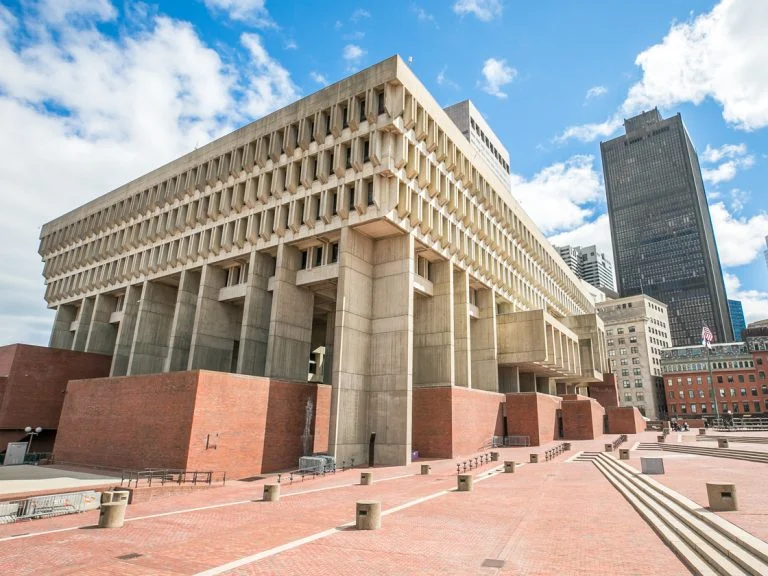
Old Scollay Square/Government Center
Old Scollay Square/Government Center
Scollay Square was Boston’s entertainment district for many years, noted for its bars, dance halls, burlesque theaters, penny arcades and tattoo parlors. It was also the home of some of Boston’s finest restaurants, hotels, and retail establishments. During World War II, there were several shipyards and army bases in the Boston area. Scollay Square became a favorite stop for servicemen passing through the city. The old buildings of Scollay Square were torn down for urban renewal in the 1960’s and replaced with city, county, state, and federal buildings.
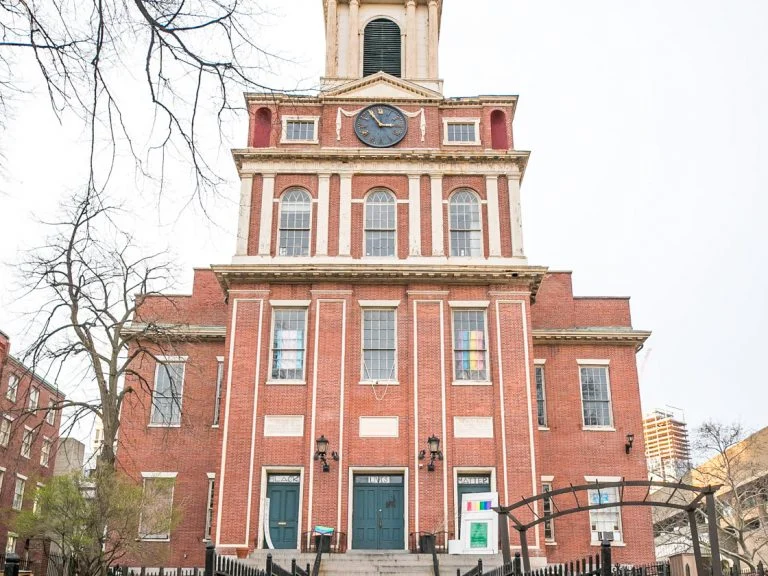
Old West Church
Old West Church
The present Old West Church was built in 1806. In the years before the Civil War, the church was used to hide fugitive slaves. From 1896 to 1960, after the congregation sold the building to the city, the Boston Public library had a branch library in the building. For many years, on Election Day, the building was used as a polling place. John and Jackie Kennedy were registered to vote here. The building reopened as a Methodist Church in 1962.
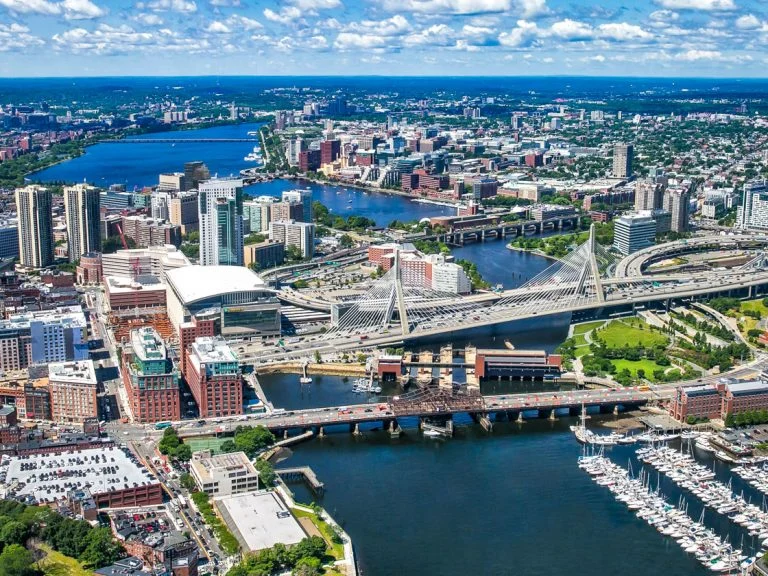
West End
West End
This was an old residential neighborhood that was torn down for urban renewal in the late 1950’s. The old tenement buildings were replaced with high-rise apartment buildings and government buildings. Many of the displaced low-income residents moved into Scollay Square and were again displaced a few years later when Scollay Square was demolished. The famous actor and director, Leonard Nimoy grew up in the West End.
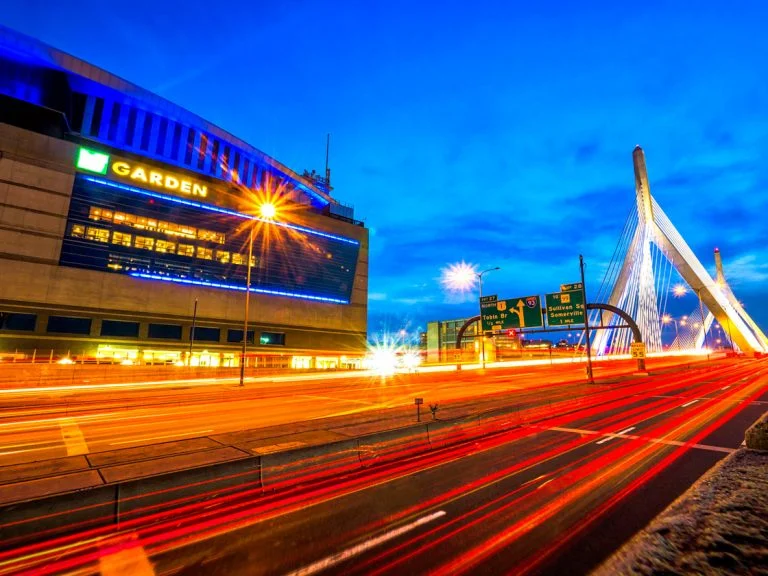
TD Garden
TD Garden
Completed in 1995, this is the home of the Boston Bruins and the Boston Celtics. It replaced the old Boston Garden, which was torn down in 1998. North Station is under TD Garden. For many years, the Ringling Brothers, Barnum & Bailey Circus performed here in the fall (Ringling Brothers ceased operations in 2017). The concrete ramp was designed and built so the circus elephants could get into the building. If the ramp were any steeper, the elephants would not be able to walk on it.
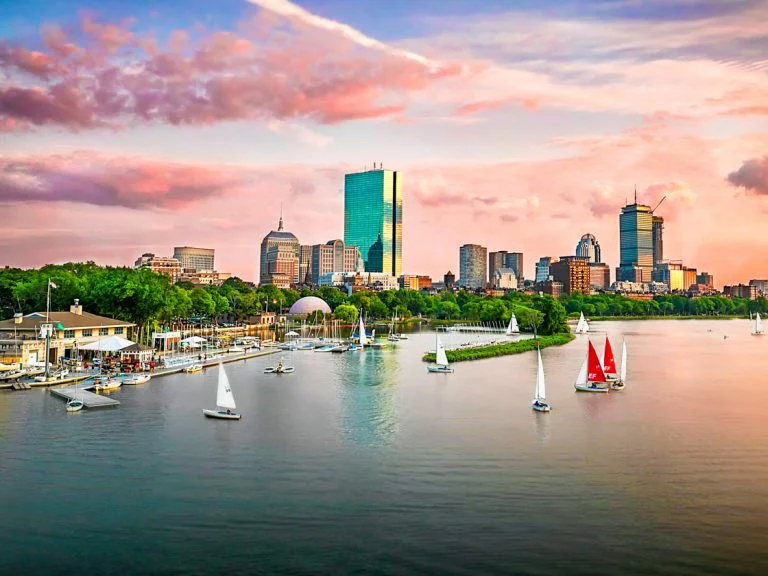
Esplanade
Esplanade
This park is all landfill. The widow of Boston businessman James K. Storrow donated money from his estate to landscape the park. Storrow Drive was named for him. It’s the home to many playgrounds, bike and running paths and is a great place to visit during your trip to Boston. One of Boston Duck Tours “Quack, Quack, Give Back” recipients, Community Boating is located here and it’s also the location of Boston’s 4th of July celebration each year.
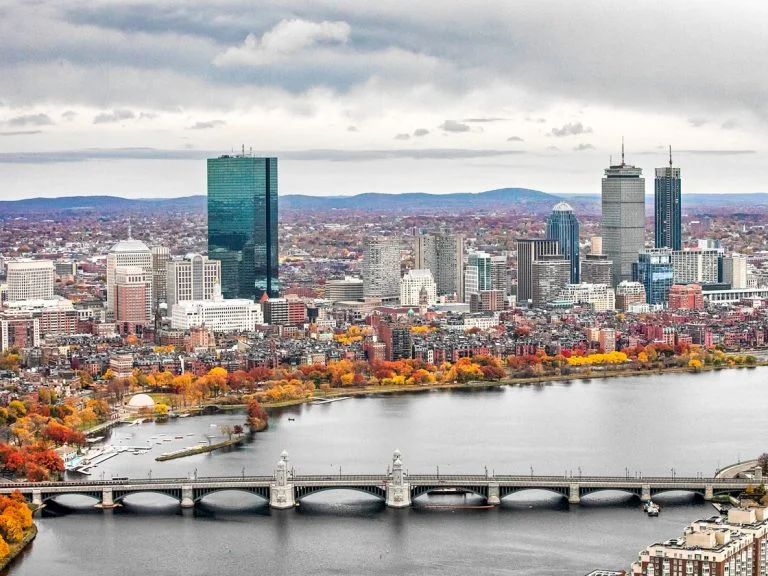
Longfellow Bridge
Longfellow Bridge
The Longfellow Bridge was built in 1907. It was named for famous American poet Henry Wadsworth Longfellow. Longfellow lived in Cambridge and taught languages at Harvard. The Longfellow Bridge was built on the site of the old West Boston Bridge. The West Boston Bridge, built in 1793, was the first bridge built across the Charles River from Boston to Cambridge (in 1786, a bridge had been built from the North End to Charlestown). The bridge was rebuilt in 1854 and torn down when the Longfellow Bridge was built.
It’s also affectionately known to locals as the salt pepper bridge because the towers look like salt and pepper shakers. It went through a $305,000,000 renovation that was completed in 2018.
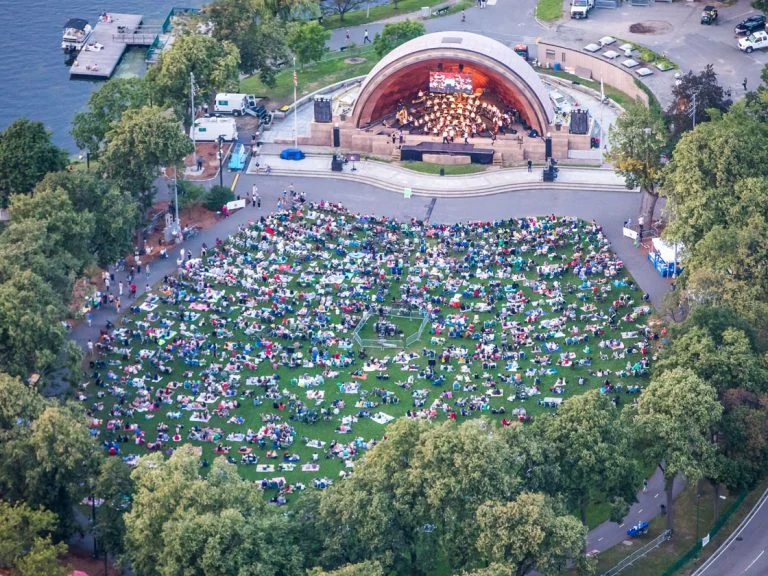
Hatch Shell
Hatch Shell
The Hatch Shell was built on the Esplanade in 1940 and was funded by a trust fund established by Maria Hatch as a memorial to her brother. It is used in the summer for concerts, movies, and civic events. Every year, on the Fourth of July, the Boston Pops Orchestra performs in the Hatch Shell. The concert is followed by a spectacular fireworks display. Arthur Fielder introduced outdoor concerts on the Esplanade in 1929.
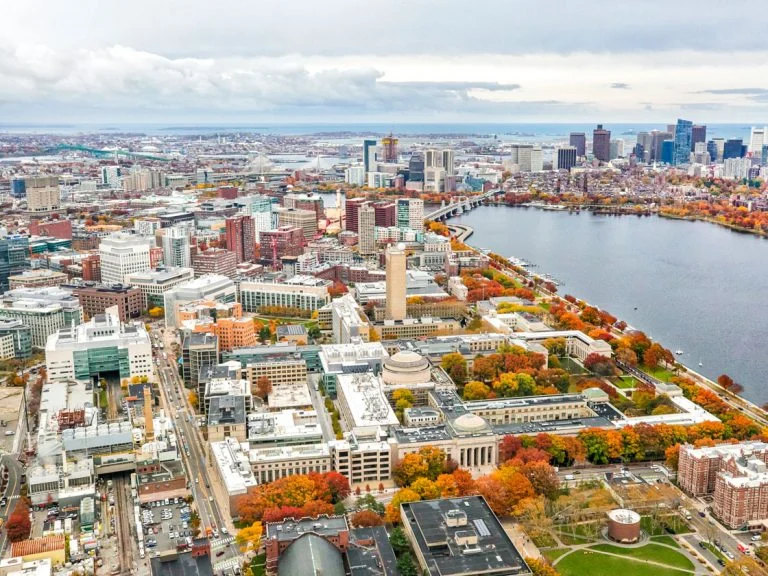
MIT
MIT
The school was chartered in 1861. While a two-building campus was being built in the Back Bay, the first classes were held in the Mercantile Building in downtown Boston. At that time, tuition for a freshman was $100 a year. MIT moved from the Back Bay to Cambridge in 1916.
In 1868, MIT established the first school of architecture in the United States. The first analog computer was developed at MIT in 1925.
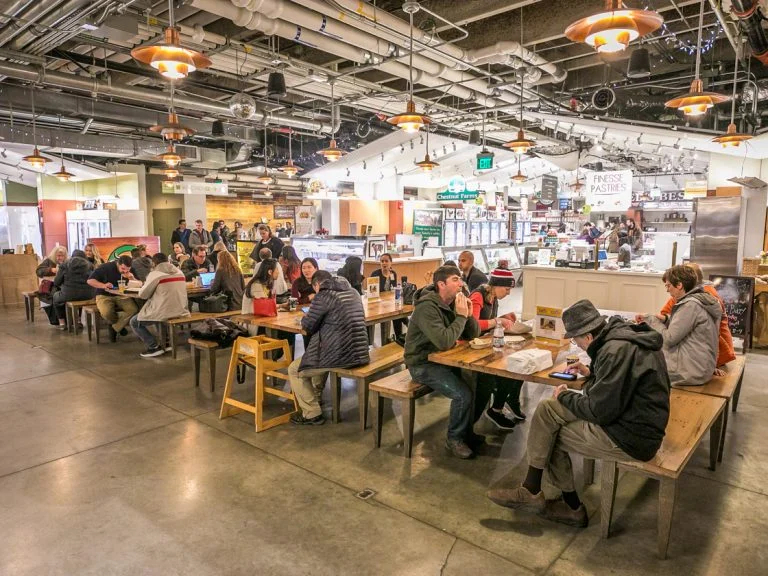
Boston Public Market
Boston Public Market
The Boston Public Market is an indoor, year-round marketplace featuring 35 New England artisans and food producers housed under one roof offering fresh foods, prepared meals, crafts, and specialty items. Residents and visitors alike can find seasonal, locally sourced food from Massachusetts and New England, including fresh produce, meat and poultry, eggs, dairy, seafood, baked goods, specialty items, crafts, and prepared breakfast, lunch, and dinner options. Everything sold at the Market is produced or originates in New England, as the seasons allow.
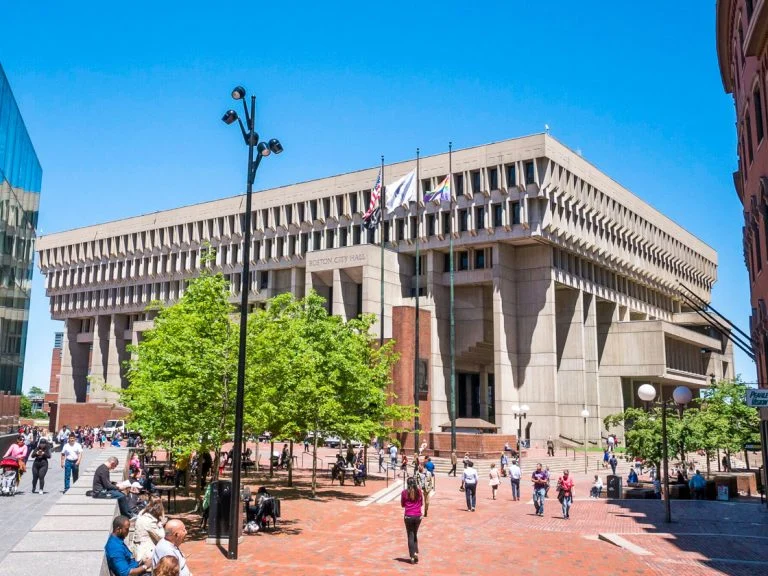
City Hall
City Hall
Boston’s City Hall was built in 1968. It was part of the Government Center urban renewal project that replaced Old Scollay Square with new buildings. The current mayor of Boston is Michelle Wu who assumed office in 2021, becoming the first woman elected to serve as Boston’s mayor.
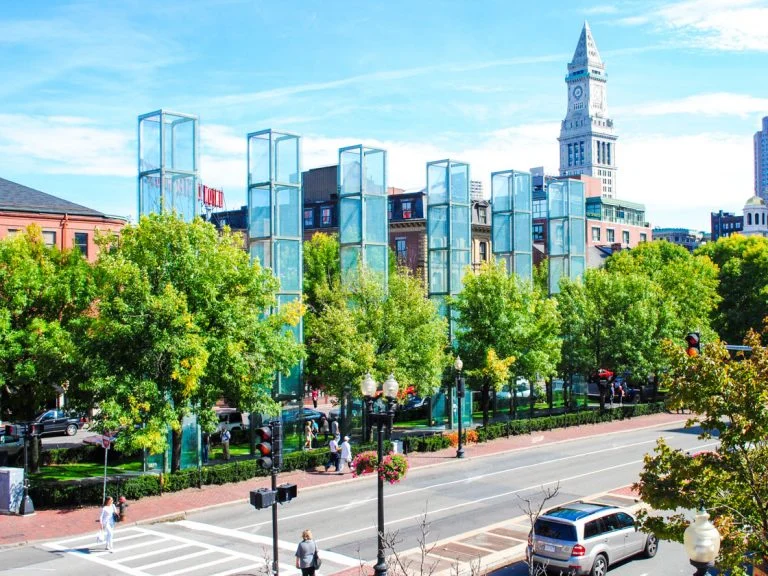
Holocaust Memorial
Holocaust Memorial
The New England Holocaust Memorial was dedicated in October of 1995. The six towers are etched with six million numbers in memory of the six million Jews who perished in the Holocaust. Each tower represents one of six principal Nazi death camps.
The Holocaust Memorial was conceived by a group of Holocaust survivors. Each tower is 54 feet tall. There is a walkway under the towers. Along the walkway, there is information about the Holocaust. There are also quotations from survivors and witnesses.
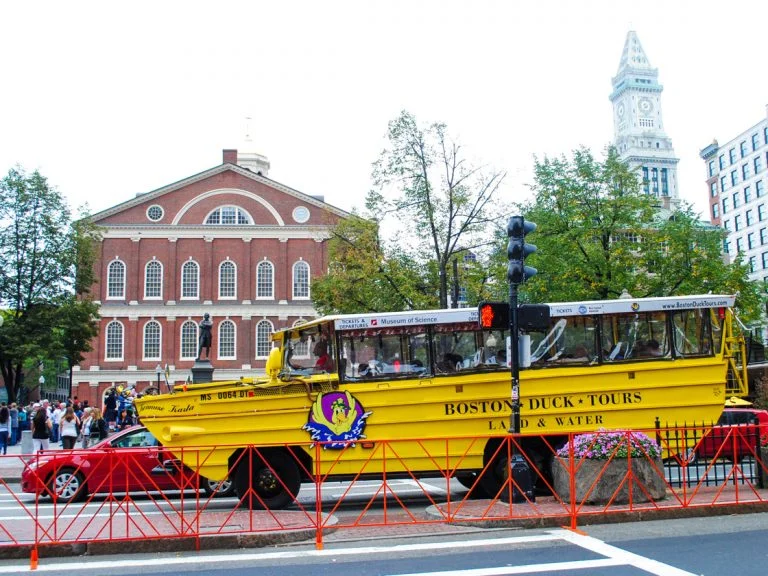
Faneuil Hall
Faneuil Hall
Faneuil Hall was built in 1742. The patriot James Otis called the building “The Cradle of Liberty.” In that hall, James Otis, Sam Adams, Joseph Warren and other patriots debated the issues that led to the Revolutionary War.
Faneuil Hall was a gift to Boston from the wealthy merchant, Peter Faneuil. It was a market house with a large hall on the second floor for public meetings.
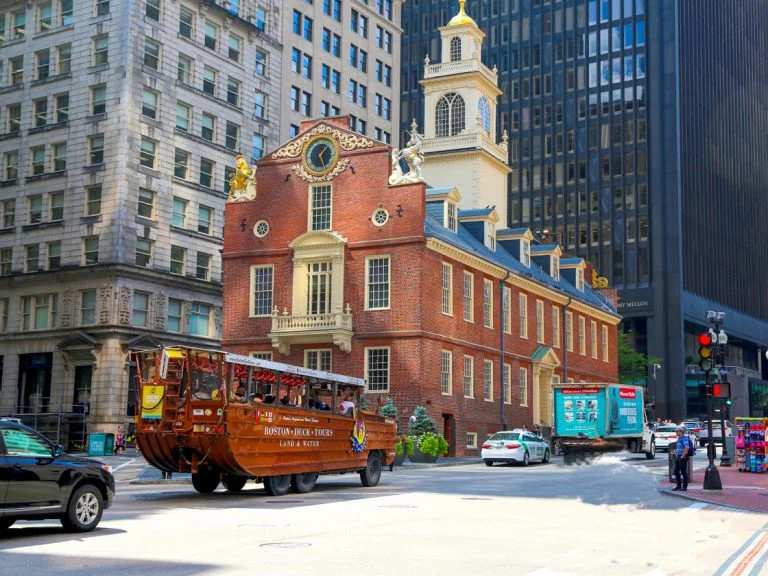
Old State House
Old State House
The Old State House was built in 1713. This was the seat of colonial government in Massachusetts. In 1761, in the chambers on the second floor, the lawyer James Otis appeared before the Superior Court. For eight hours, he spoke against the Writs of Assistance issued by that court. Although he lost the case, his argument sparked the flames of discontent that eventually led to war.
In front of the building sits the site of the famous Boston Massacre.
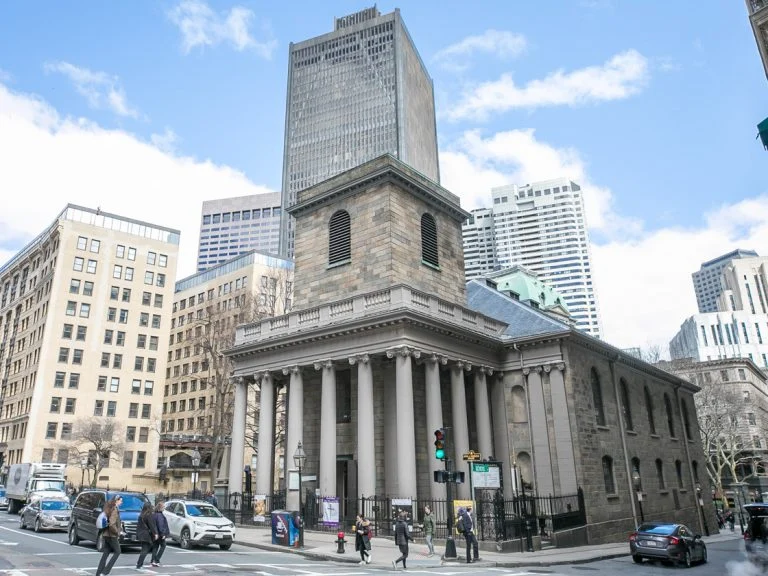
King's Chapel
King's Chapel
King’s Chapel was the first Anglican Church in Boston. In 1687, Governor Edmund Andros, an Anglican, ordered it built on a corner of the Old Burying Ground. It was a wooden building. In 1754, a new, larger building was completed. The new church was the first granite building in Boston.
In 1789, George Washington attended a concert in King’s Chapel. The bell in the church was installed in 1816. It is the largest bell ever made by Paul Revere.
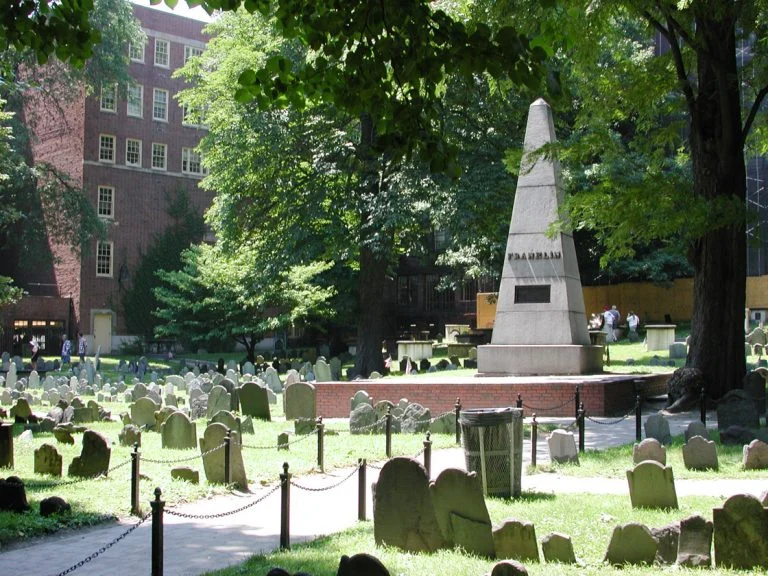
Granary Burying Ground
Granary Burying Ground
Dating back to 1660, this was Boston’s third burying ground. It got its name from the Town Granary, a grain warehouse next to the burying ground (now the site of the Park Street Church).
Buried in the Granary Burying Ground are three signers of the Declaration of Independence, John Hancock, Sam Adams, and Robert Treat Paine. Benjamin Franklin’s parents and the five victims of the Boston Massacre are buried here. So is the patriot James Otis. Paul Revere and his two wives, Sara Orne and Rachael Walker, are buried here. Peter Faneuil, nine former governors of Massachusetts, and the first mayor of Boston, John Phillips, are buried in the Granary Burying Ground.
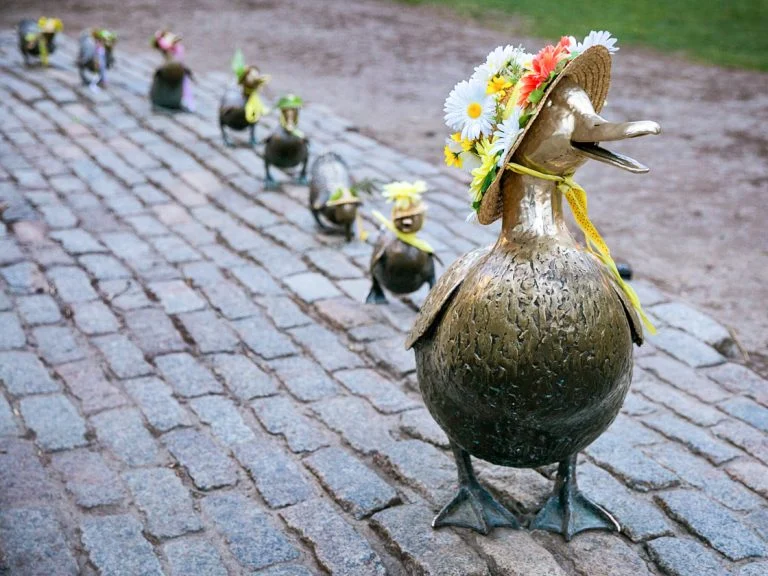
Make Way for Duckling Statues
Make Way for Duckling Statues
The statues are Mrs. Mallard and her eight ducklings. They were made famous by Robert McCloskey’s popular children’s book, Make Way For Ducklings. The book was published in 1941. Make Way For Ducklings is so popular in Boston; the Boston Public Library has over 150 copies of the book and is the official Children’s book of Massachusetts.
The statues were created in 1987 by sculptor Nancy Schon, who lives in Newton, MA.
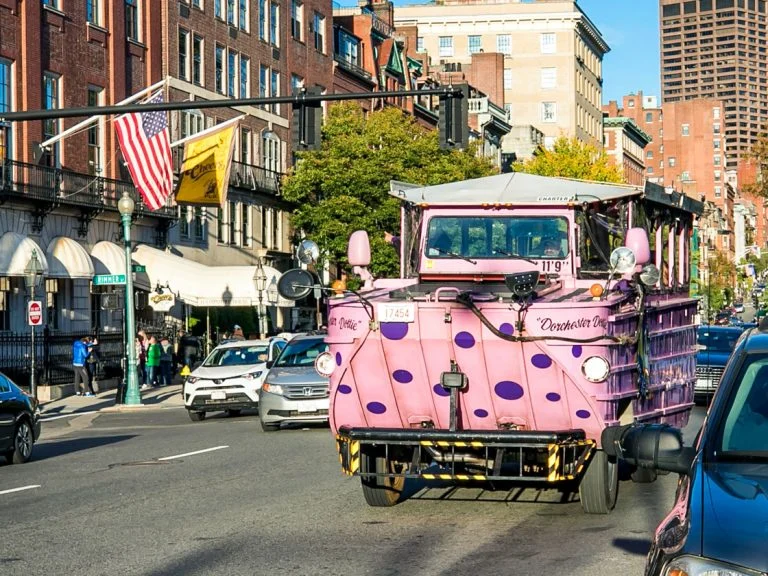
Bull & Finch Pub "Cheers"
Bull & Finch Pub "Cheers"
The Bull & Finch Pub at 84 Beacon Street is in the basement of the Hampshire House. The Bull & Finch was the inspiration for the television show, “Cheers.” The bar was established in 1969.
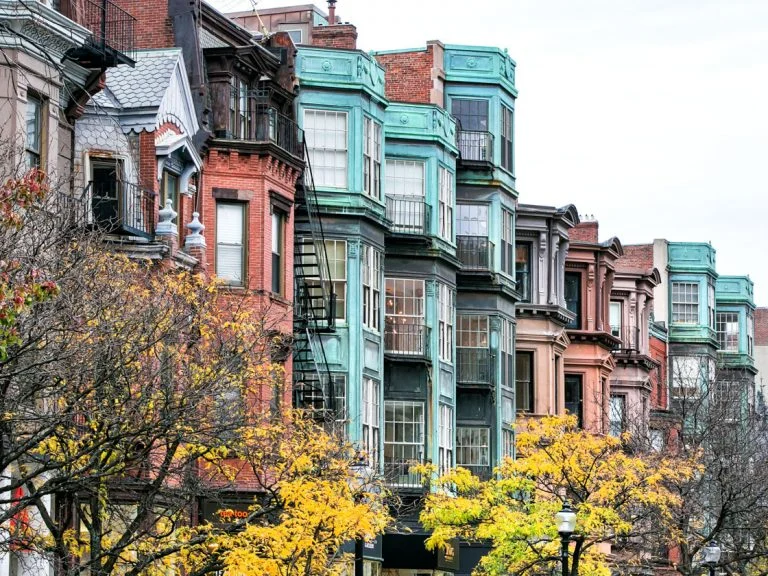
New Bury Street
New Bury Street
Newbury Street is where some of Boston’s finest clothing stores, boutiques and art galleries are located. The street also has restaurants, music stores, an army-navy surplus store, a hardware store and a shelter for homeless women.
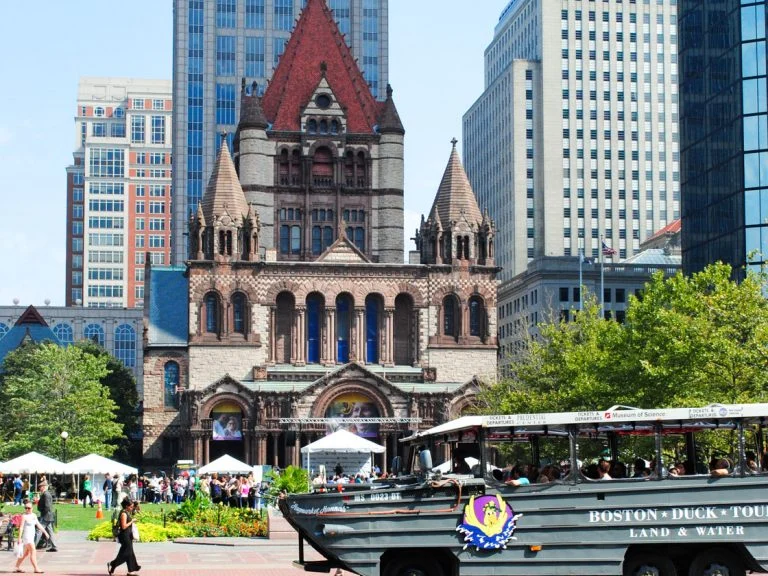
Trinity Church
Trinity Church
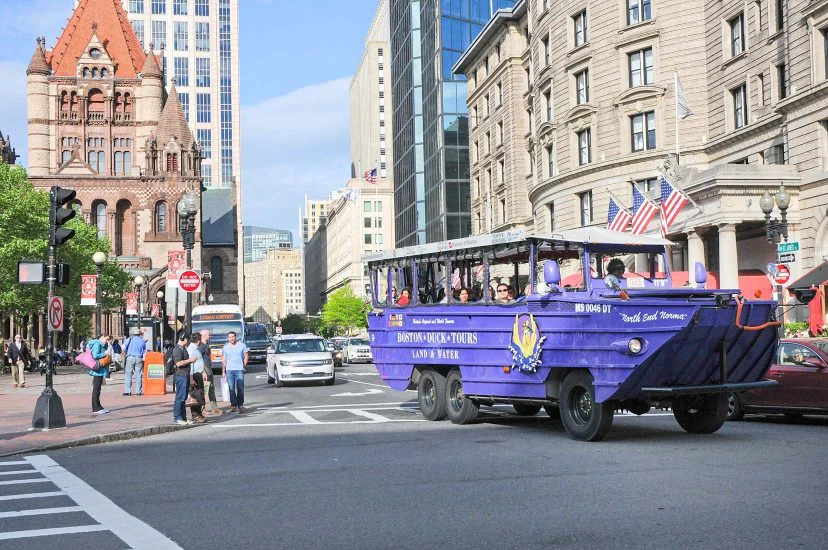
Trinity Church was completed in 1877. This building is considered to be one of the ten finest examples of architecture in the United States and is the only church on the list. The architect was Henry Hobson Richardson, thought to be one of the three greatest architects in the history of the country (Frank Lloyd Wright and Louis H. Sullivan are the other two).
Because the Back Bay neighborhood is all landfill, the old buildings were built on spruce wooden pilings driven through the fill and into a thick layer of blue clay. The Trinity Church is on 4,502 wooden pilings.
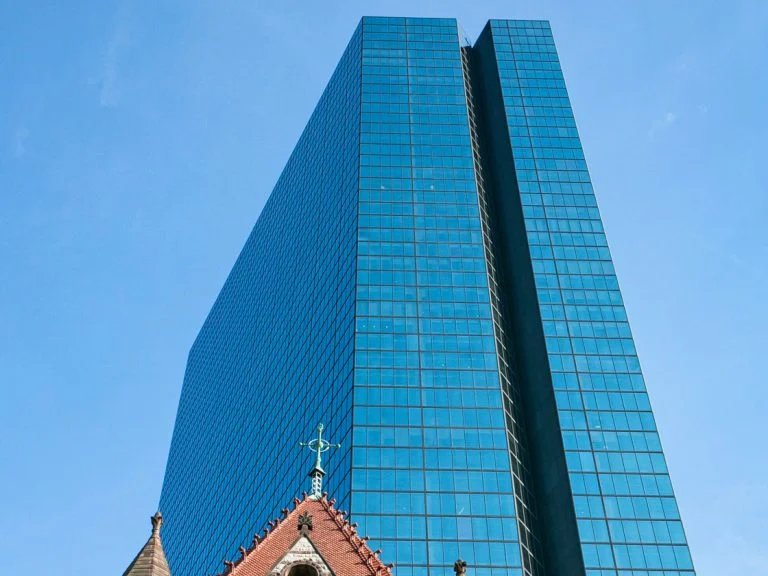
200 Clarendon
200 Clarendon
This is New England’s tallest building. It is 60 stories tall. There is no public observatory at the top of the building. Formerly referred to as The Hancock Tower, it completed in 1976. The principle architect was Henry Cobb, in partnership with I.M. Pei. The Tower has 10,346 panes of reflective glass. Guests like to take a picture of the Duck reflected in the glass on the St. James side of the building. The building was designed to reflect the old architecture of Copley Square.
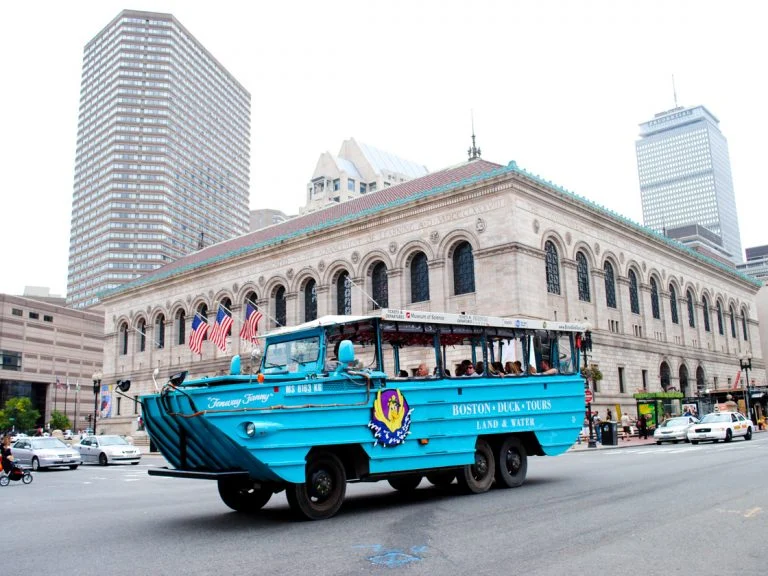
The Boston Public Library
The Boston Public Library
In 1848, the Boston City Council enacted a statute creating the Boston Public Library. The library is notable for being the first public library in the United States to allow patrons to borrow books and take them home, a revolutionary idea at the time. Today, anyone with a Boston Public Library card may borrow up to 75 books at a time.
The Boston Public Library is one of the great treasures of Boston. In addition to the collection of rare books and documents, the library is filled with sculpture and paintings. An open-air courtyard in the center of the 1895 building has a lovely garden.
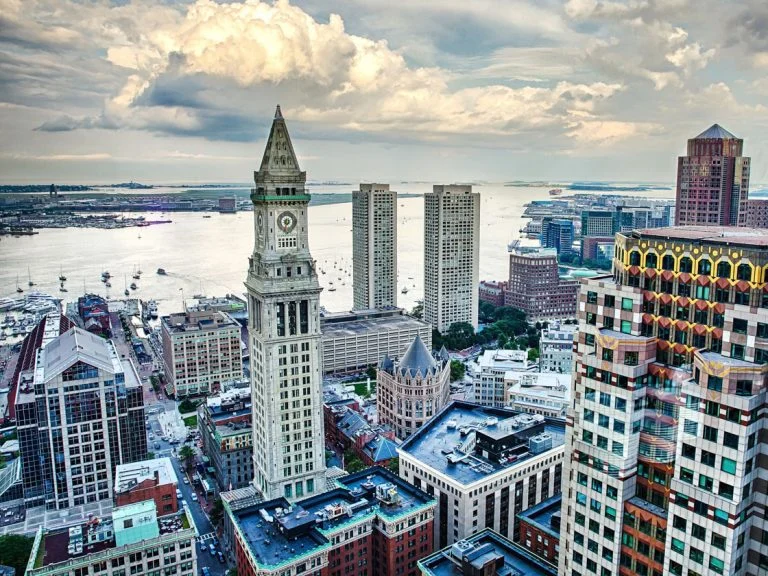
Custom House
Custom House
The Custom House was built in 1847. The tower was added in 1915. For many years, by tradition, no building in Boston could be taller than the Custom House. It was the tallest building in Boston until the Prudential Building was completed in 1965. Today the building is a Marriott Time share resort.
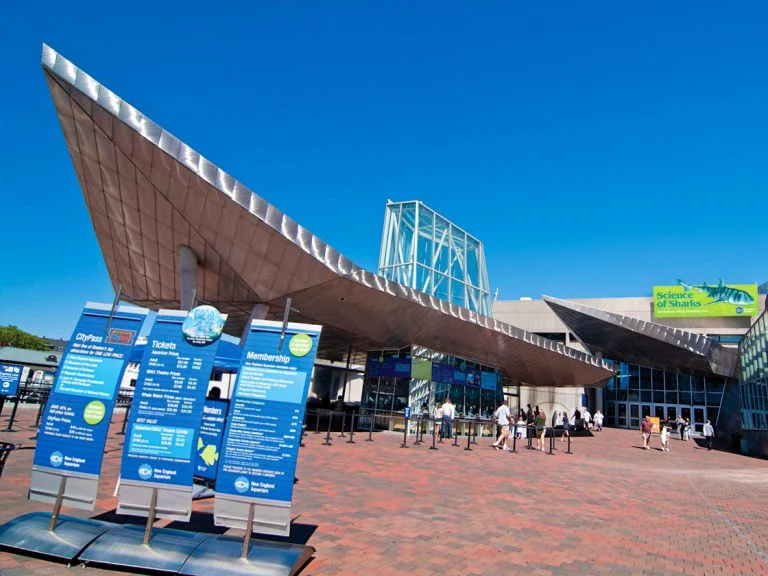
New England Aquarium
New England Aquarium
The New England Aquarium first opened to the public in 1969. A main feature of the aquarium is a four story, forty-foot diameter salt-water tank. The tank is so large, it had to be built first, before the rest of the aquarium was built around it. The tank is home to several species of salt water fish, sharks, and sea turtles, including Myrtle who weighs 550 pounds. The aquarium also has a state of the art medical facility for injured sea animals. The New England Aquarium’s IMAX theater is 85 feet wide and 65 feet tall.
Long Wharf
Long Wharf
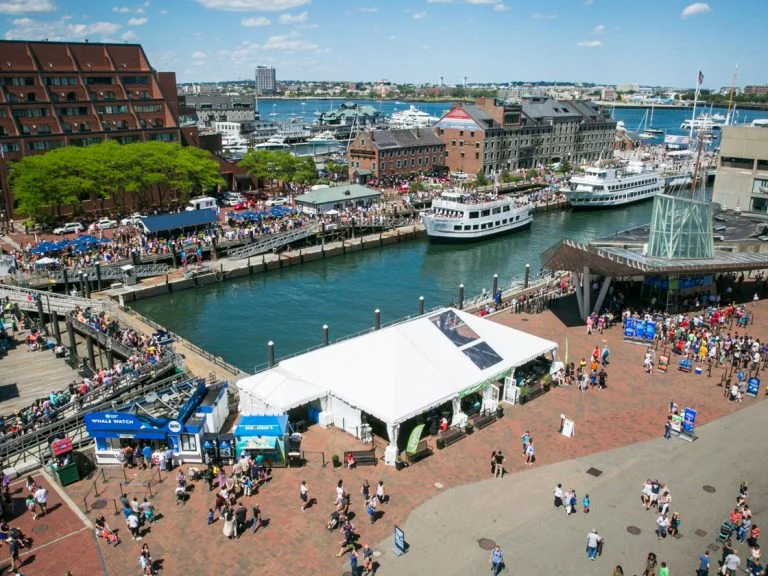
When it was built in 1710, Long Wharf extended a third of a mile into the harbor. Long Wharf originally connected to land near present-day Kilby Street. King Street, now State Street, was on Long Wharf. Over the years, both sides of the wharf have been filled in to create the current shoreline.
Rose Kennedy Greenway/Wharf District Park
Rose Kennedy Greenway/Wharf District Park
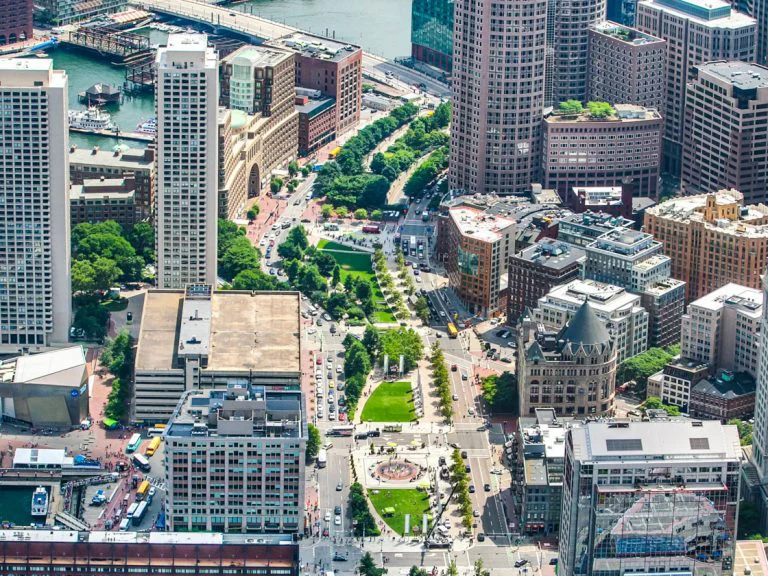
The Rose Kennedy Greenway replaced what was known as the Central Artery which was torn down during the “Big Dig” project and replaced with an underground tunnel below the new 30 acre park.
The Wharf District Park is one of 6 distinct parks that make up the Greenway. It includes the Rings Fountain at Milk Street with its unpredictable water patterns that jet into the air from a flat paved surface, the Mother’s Walk, children of all ages have inscribed pavers with the names of special people who have loved and inspired them, ever changing art installations and farmer’s markets on Saturdays throughout the summer and early fall.
Post Office Square
Post Office Square
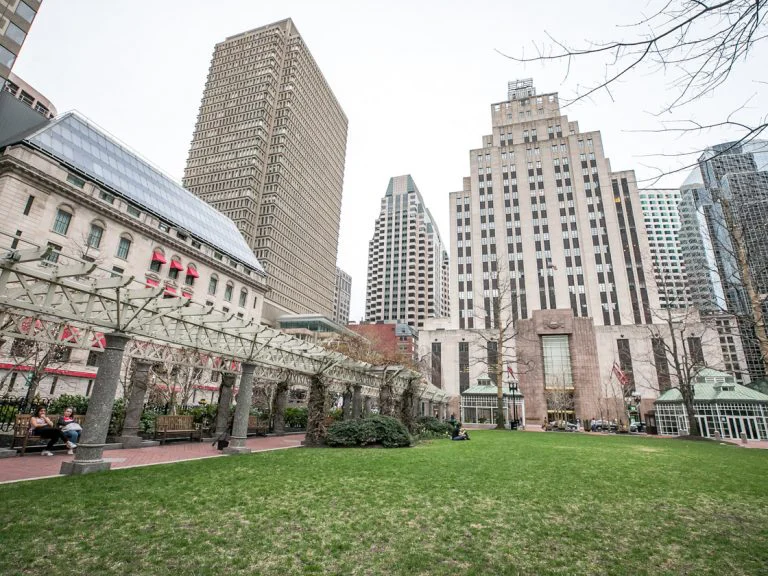
Post Office Square was the site of the first post office in America (1639). The park in the square was made possible when an old parking garage was torn down and replaced with an underground parking facility in 1991.
In the center of Post Office Square is the Norman B Leventhal Park. The 1.7 acre park’s centerpiece is a walk-through sculptural fountain. More than a hundred different species of plants, flowers, bushes and trees are within the park.
Quincy Market
Quincy Market
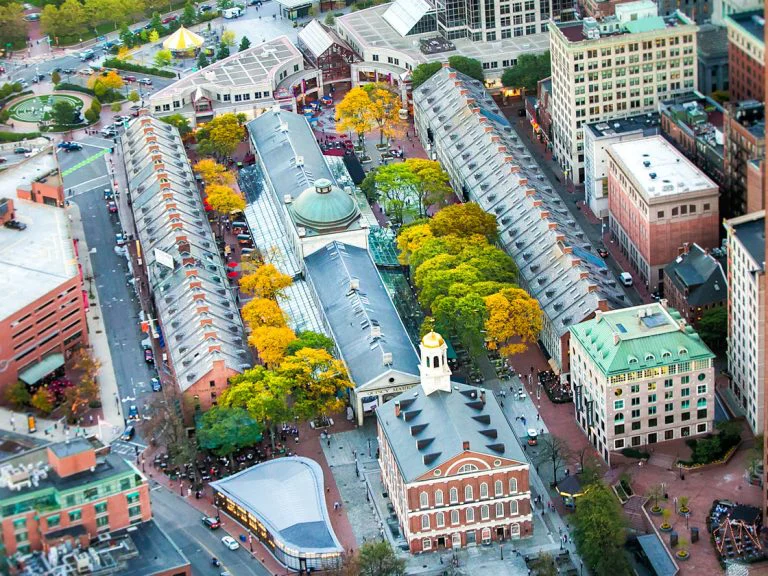
Quincy Market is one of Boston’s top destinations. It was constructed between 1824 and 1826 and named to honor Mayor Josiah Quincy who constructed the market without implementing any new tax or debt for the city. Built directly behind Faneuil Hall, Quincy Market sits on landfill that used to be Boston Harbor which was filled in specifically for a plot for the market to sit on.
It sits 2 stories high and is 535 feet long. It was originally used as a market that would sell anything from meat, cheese, bread, seafood and more. By the 1970’s all of the purveyors moved out from Quincy Market to larger facilities that could support the city and in 1976 the Market reopened with food stalls, fast food options and restaurants which is very popular with locals and visitors alike. They also feature many street performers during the busy Spring, Summer and Fall months.
The 2 buildings that flank Quincy Market, North Market & South Market are 4 1.2 stories in height and house shops, restaurants and office space.
Quincy Market was designated a National Historic Landmark and listed on the National Register of Historic Places in 1966 and the central domed building was designated a Boston Landmark in 1996. Most Boston trips are not complete without a stop at Quincy Market.
